PROBLEMATIC BARKING: Identifying the why

labrador-1287298_1280

A lot people will tell me ‘Yeah, she’s a great dog! -for the most part.But I can’t stand the issue with her barking!’ It is a common problem for owners and it can generate a lot of frustration between both parties.

First you need to figure out why your dog is barking. Always go to the root of the problem, otherwise you are just treating symptoms and guessing but never dealing with the cause. Once you figure out the reason, you can work from there. Is the dog alerting to someone they see outside? Are they barking at a squirrel they want to chase? Do they need to go out to potty? Are they sound sensitive and reacting to noises? What is the reason they are barking?

Another reason people don’t quickly see results to just treating the ‘symptoms’ is that barking is a very self rewarding behavior.

After all, regardless of what is stimulating them, at least they are doing SOMETHING about it! Have you ever sat around and just worried over an issue and wondered why you were just worrying so much? Well at least your brain is saying that, by worrying, the illusion of SOMETHING is being done!

However, you cannot go about trying to remedy the situation without getting an understanding of your dog’s motivation. Then you can figure out whether you want to train a ‘quiet’ command. Use a ‘leave it’ to tell your dog to remove their focus from the stimuli, or maybe you need to gently lead your dog away from the situation and give them an alternate behavior where they can calmly focus on something positive instead of continually being aroused and feeling the need to bark.

Whatever the solution, this question first needs to be answered: “Why is my dog barking?”

HOW OFTEN SHOULD YOU BE WASHING YOUR DOG?

dog-2414188_640

How frequently should you be washing your dog? When your dog gets dirty or is having their fur cut. Otherwise? Generally speaking: twice a year is a good mark. If you are bathing your dog more often you may be stripping their skin and coat of important natural oils. If your dog has a healthy coat and skin, then bathing should not be a regular necessity. Brush your dog as needed, rinse them when they get a bit of dirt on their paws or legs and wipe them down with a damp cloth from time to time. You can also try using an apple cider vinegar spray to help keep the coat feeling fresh without drying out the hair or skin. This is especially helpful after brushing a short-haired double coated breed, like a labrador.

———

1) Fill a spray bottle with 1 parts apple cidar vinegar to 9 parts water (you can use 15-20% vinegar if needed).

2) On a mist setting, spritz their coat down lightly. Try to avoid their faces or head alltogether as some dogs are not too fond of it.

3) Gently wipe down with a clean hand towel and repeat if needed. For many types of fur, this should give a clean sleek feeling.

DOGS DON’T GENERALIZE WELL

dog-987941_1280.jpg

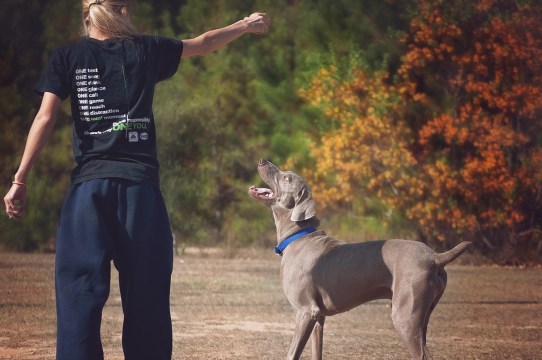
We often make the mistake of thinking dogs know something just because they learned it once, or the same way. But dogs don’t generalize well. Just because your puppy knew how to ‘sit’ in classes doesn’t mean they get it when out and about. When your older dog stays before a meal is put down does not mean it translates to the neighborhood. That is why I always tell people to teach a new behavior in a good classroom or better yet at a relaxed place like their home, where you can perfect that skill in a controlled environment.

But here is the key: you’ve got to start variations at those places too! If you normally give a command when you are standing, try kneeling down… does your dog still follow through? What about when you are across the room? Getting a dog to better generalize means working through a variety of different conditions at home to make the command have a solid foundation. But after that, you still must take that skill “on the road”.

THE COLLAR GRAB

dog-731979_1920This is a practice that many should look into but especially goes with the recall (come when called) and every owner should practice it if they expect to spend any time with their dogs outside off leash.

So why work with your dog to be comfortable with you grabbing their collar? First off, there are countless times when safety necessitates it. Secondly, it can be invaluable in every day commands. For example, if you call your dog to you and she comes but ducks away when you try to reach for her collar then how are you suppose to put her leash back on? If you need to remove your dog from the front door (who is still too exuberant to greet visitors politely) but he won’t let you take him by the collar as he knows the fun will end, then you are busy chasing him around your visitors which teaches him nothing and only frustrates you more. How about the dog who considers reaching for their neck a game and tries to mouth you instead? Having a dog who is comfortable with and associates a collar grab with something calming and positive is a priceless part of communication and trust.

You can introduce your dog to this in a number of ways but start out in the home environment when there is nothing else going on. Just gently hold their collar for a mere second and then praise and treat. The next time do it a second longer, then praise and treat. Make sure you are in front of them and they can see you reaching. Then move to practicing doing it over their head, under the neck, etc. The next session make sure to vary your positions: sitting, standing, grabbing while walking next to your dog and so forth.

As you can tell your dog is associating this reaching and grabbing interaction with something positive and harmless, you will have an easier time corralling them when it comes to needing to settle them down or leash them. Which is priceless for a dog who loves to ‘come’ but then wants to be chased instead!

Any questions? Leave a comment below!