PROBLEMATIC BARKING: Identifying the why

labrador-1287298_1280

A lot people will tell me ‘Yeah, she’s a great dog! -for the most part.But I can’t stand the issue with her barking!’ It is a common problem for owners and it can generate a lot of frustration between both parties.

First you need to figure out why your dog is barking. Always go to the root of the problem, otherwise you are just treating symptoms and guessing but never dealing with the cause. Once you figure out the reason, you can work from there. Is the dog alerting to someone they see outside? Are they barking at a squirrel they want to chase? Do they need to go out to potty? Are they sound sensitive and reacting to noises? What is the reason they are barking?

Another reason people don’t quickly see results to just treating the ‘symptoms’ is that barking is a very self rewarding behavior.

After all, regardless of what is stimulating them, at least they are doing SOMETHING about it! Have you ever sat around and just worried over an issue and wondered why you were just worrying so much? Well at least your brain is saying that, by worrying, the illusion of SOMETHING is being done!

However, you cannot go about trying to remedy the situation without getting an understanding of your dog’s motivation. Then you can figure out whether you want to train a ‘quiet’ command. Use a ‘leave it’ to tell your dog to remove their focus from the stimuli, or maybe you need to gently lead your dog away from the situation and give them an alternate behavior where they can calmly focus on something positive instead of continually being aroused and feeling the need to bark.

Whatever the solution, this question first needs to be answered: “Why is my dog barking?”
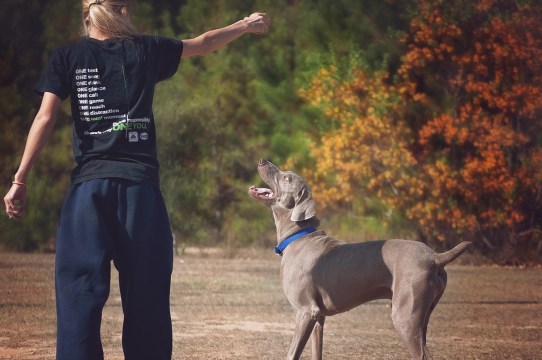
DOGS DON’T GENERALIZE WELL

dog-987941_1280.jpg

We often make the mistake of thinking dogs know something just because they learned it once, or the same way. But dogs don’t generalize well. Just because your puppy knew how to ‘sit’ in classes doesn’t mean they get it when out and about. When your older dog stays before a meal is put down does not mean it translates to the neighborhood. That is why I always tell people to teach a new behavior in a good classroom or better yet at a relaxed place like their home, where you can perfect that skill in a controlled environment.

But here is the key: you’ve got to start variations at those places too! If you normally give a command when you are standing, try kneeling down… does your dog still follow through? What about when you are across the room? Getting a dog to better generalize means working through a variety of different conditions at home to make the command have a solid foundation. But after that, you still must take that skill “on the road”.

NOT IN AN INSTANT

dogs-2338674_1280

When it comes to dog training, anyone who claims to you they can get results or a cure “Instantly!” is more than likely going to be doing something unethical or they are just giving out a sales pitch. Many times, working on strengthening a behavior or getting rid of an unwanted behavior takes training for the dog and the human. How long or short it takes to reach those goals will vary by a number of different potential elements. Rarely do lasting results happen instantly. Training is a process, and all processes require time.

A great relationship is a worthy investment!

5 MAIN TIPS FOR SUCCESS WITH A NEWLY ADOPTED DOG

These are just the big ones when it comes to setting a new adult dog up for success in your household. Keep in mind these are just basic tips and I will be writing more extensively on each topic at a future time.

stafford-672698_640

1. Go slow and don’t overwhelm them. Don’t plan any family outings, trips to the park, have visitors over or any unnecessary exposure for the first 1-4 weeks. (Not including a veterinary visit- a checkup appointment should be made within the first week of bringing your new dog home.)

2. Use a crate. If you don’t have a crate then use an ex-pen, or baby gate a ‘dog proofed’ room. Just like you would with a young puppy, you want your new dog to have a safe place when you cannot be watching them. Crates are also the best option for potty training which is discussed below.

3. Don’t give any high value items like bully sticks, bones or chews in the first week. Sometimes such an item has to be taken away (preferably traded for) for safety reasons. You don’t know your new dog’s habits yet and don’t want to find out the hard way that the dog has a history of resource guarding or food aggression- nor do you want to create it in a dog who doesn’t understand that you may have perfectly good intentions!

4. Supervise, supervise, supervise. If you have any other animals in the home, all interactions should be closely monitored and adequate safe spaces and down time should be given to all so that everyone can get used to the household changes. Remember it is more than just your newest family member who is going to have to adjust. If you are present you also can make sure your new canine won’t be developing bad habits like chewing, counter surfing or getting into any other trouble.

5. Assume the new dog is not potty trained, even if you are told otherwise. Set the new dog up for success treating her or him like a puppy for the first few days. Lots of frequent trips outside, lots of praise when they ‘go’ and never leave them unsupervised so they don’t have a chance to make a mistake in the house.