WHY POTTY PADS ARE A POOPY IDEA

dog-1158929_1280If you want to have a housebroken dog that will not relieve themselves inside your home, don’t use potty pads. Ever. A dog must have a clear picture right from the beginning that going pee or poop in the house is not acceptable and that instead relieving themselves outdoors is always the way to go! When a dog is taught it is an acceptable behavior to ‘go’ in the house, it is a hard habit to break. Harder even if you reinforce it with a potty pad as they will often associate other soft surfaces such as rugs and carpeting or even clothes, as acceptable for peeing on as well.

When cleaning such areas(or even some hardwood flooring) most basic cleaners won’t be enough as the odor is still present to your dog’s nose. This again just tells them this is an ‘okay’ place to eliminate.

Another problem that often occurs is the dog uses one pad for peeing, but won’t use it for pooping, so they end up going on the floor next to it. In another instance, lets say you have multiple dogs and one of them saturates one pad, but a few hours later needs another so you end up placing multiple pads and then more pads and so on and soon enough your entire living room is a doggy bathroom! Not a fun way to live.

If this mistake has already been made and you want to transition your dog to being fully housebroken there are a few basic things you can do:

1) Treat your dog like a new puppy and go back to ‘housebreaking 101’

2) This will sometimes entail hiring a dog walker to let them out if you cannot be there frequently

3) Get a blacklight and check for any and all urine stains.

4) Clean these areas with an enzymatic spray such as Nature’s Miracle to help eliminate the odors that will attract your dog back to these places

5) Sometimes it is too much of an uphill battle and it is better to just replace old rugs, bathmats and even carpeting.

6) Patience and consistency are two of the principles of any kind of dog training. Consistency will be incredibly important here!
OVERGROWN AND OVERLOOKED

DSC_9530

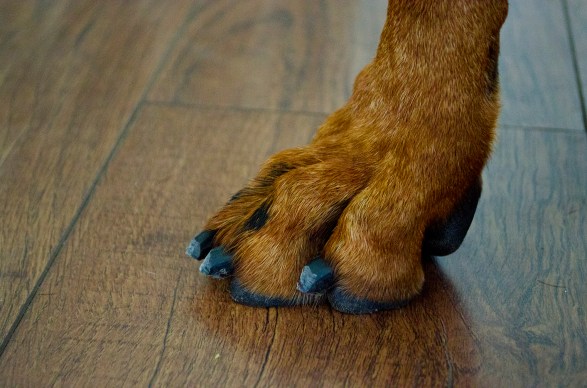
Nail length may just be the most important part of your dog’s life that you never hear about. We often think about our dogs’ annual vaccinations, quality of their fur, what their weight is at or what they are eating. But rarely does anyone touch upon how important a dogs paws are. However, paws are responsible for a boatload of wellness and as such, if they are not kept in good condition the rest of the body will be adversely affected- whether we realize it or not. A paw is filled with thousands of nerve endings and is responsible for a lot more then just walking. Posture, proprioception, total body strength and prevention of ligament damage are just a few things that a dog’s paws are responsible for. When standing on a flat level surface nails should be at least a few centimeters off the ground and should not be heard when a dog is walking.

Why is this incredibly important?
When a dog is able to use the full face of their pads:

  • It increases the toes’ range of motion which allows for more strength and function; especially in the forelimbs
  • Decreases both arthritis and risk of injury to the entire body
  • Better proprioception – tells the dog’s brain where the ground is and what is an incline, what kind of surface they are on, etc.
  • Better posture – helps to increase strength along the neck and back
  • Long nails get in the way of a dog’s ability to grip on slick surfaces
  • Long nails are more likely to cause toes to splay which can be very painful


Most dog owners are unaware that dogs are intended to stand more on their toes and carry roughly 60% of their body weight on the front legs. If nails contact the floor when standing, it can make the dogs toes lean backwards. You may think a few centimeters of rocking back on their pads doesn’t seem to hurt, but it will change the dog’s posture and the whole musculoskeletal system has to adjust. This means areas are taking on more weight and pressure than they are designed to withstand. Over long periods of time, this can have a more dramatic impact. Range of motion will also be impeded particularly in the shoulders and the elbow and knee joint. All of this is especially vital when considering a dog who is in older adulthood or a senior.

An increased range of motion in the paws allows for more strength and function in the legs. The stronger and healthier the legs are the better off the rest of the body is. The lower part of the dogs leg, particularly the front lower arm and elbow, takes a bulk of impact every time the dog is upright. This means sitting, standing, walking or running(especially critical if your dog goes down stairs). The better the strength and range of motion in the paw the healthier the lower limbs are to help absorb force. Otherwise, a weak leg will pass this on to other areas of the body such as shoulders hips and even the spine.

A lot of people are afraid to do their dogs’ nails for one reason or another. They themselves are afraid, their dog has had a bad experience, they don’t know how to cut or the dog hates the dremel tool, etc. Like many aspects of training, you may not be able to achieve a turn around overnight. However, I truly believe that with diligence and patience, owners who keep their dogs nails short and take on regular nail trimming themselves, will greatly impact their dogs health (not to mention providing an invaluable trust and bonding experience). Remember that the benefits of learning and overcoming these obstacles far outweigh the risks.